 By Admin
 July 08, 2026
Anyone who's toured a food processing plant knows hygiene isn't just about clean floors and hairnets. It runs through every piece of equipment the product actually touches, and the conveyor belt is usually the one surface food sits on the longest during production. If that belt isn't built right, no amount of cleaning elsewhere in the plant really compensates. This is exactly why food manufacturers pay close attention to who they pick as their PVC conveyor belt manufacturers, rather than treating belting as an afterthought.
It sounds like a small detail until something goes wrong — a belt that traps moisture, absorbs grease, or can't survive a proper wash-down cycle. In food production, that's not a minor inconvenience. It's a contamination risk.
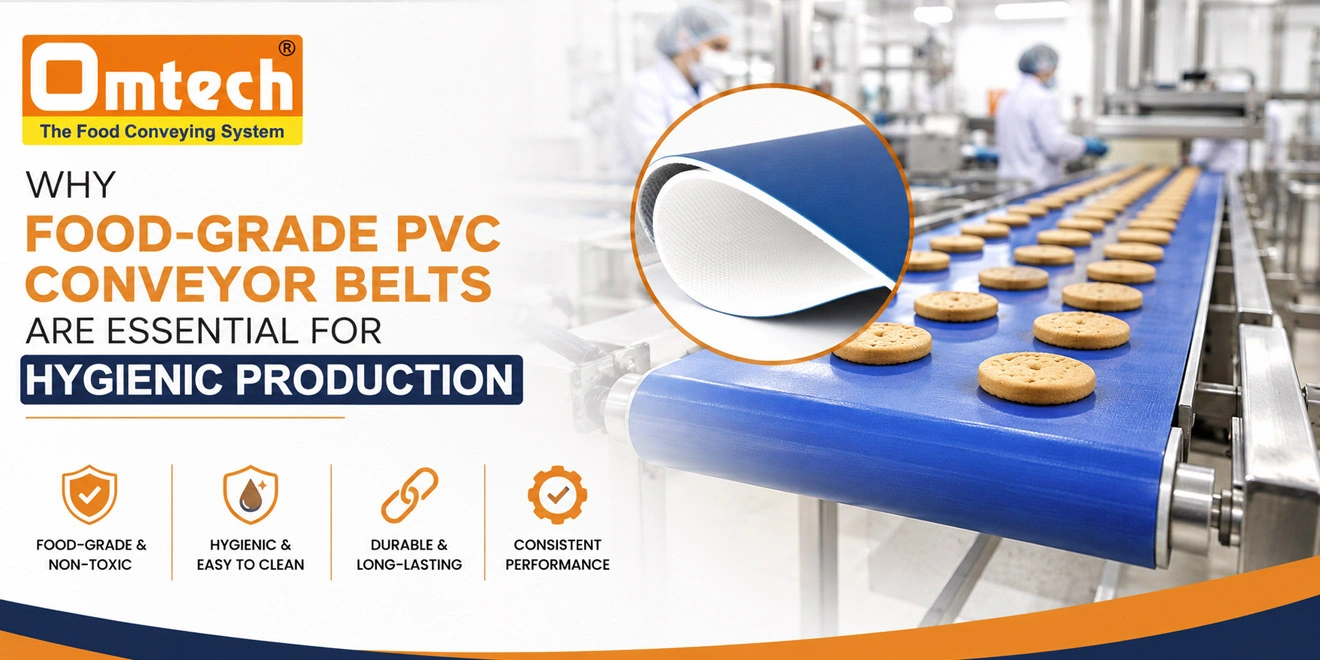
Not every conveyor belt material is suited to food contact. PVC has become a standard choice across food processing lines because it holds up well to hot water, steam, and repeated cleaning cycles without breaking down. It's also antistatic, which cuts down on dust clinging to the belt surface, something that matters a lot in bakery lines, snack processing, and dairy handling where fine particles are constantly in the air.
Food-grade lines get washed down far more often than most other industrial settings, sometimes multiple times a shift. A belt has to handle that without cracking, absorbing water, or harbouring bacteria in surface grooves. PVC belting resists chemicals, hot water, and steam well enough to survive this cycle repeatedly, which is a big part of why it's stayed a go-to option for fruit, vegetable, bakery, dairy, and general food handling lines.
A smooth belt surface isn't just about looking clean, it directly affects whether food particles get trapped and carried over between batches. Conveyor belts designed with hygiene in mind reduce this risk by giving bacteria fewer places to settle, and by making full cleaning genuinely possible rather than just cosmetic. For processors handling allergens or working across multiple product lines on the same equipment, this single detail can be the difference between a clean changeover and a recall.
Replacing a conveyor belt mid-production is expensive, not just in material cost but in the hours a line sits idle. Good food-grade PVC belting is chosen specifically for its strength and flexibility, so it survives daily wear without cracking or stretching out of shape too soon. That reliability matters most during high-volume runs, when there's simply no room in the schedule for unplanned equipment failure.
Belt quality varies a lot depending on who's actually manufacturing it, and food processors have learned this the hard way more than once. Reliable PVC conveyor belt manufacturers understand food safety compliance, know how to balance durability against flexibility, and can customize belts for specific applications like inclined transport, wet processing, or delicate product handling without compromising hygiene standards.
Hygienic food production depends on details that rarely get noticed until they fail, and the conveyor belt is one of the biggest ones. Choosing the right food-grade PVC belting protects product quality, reduces contamination risk, and keeps production lines running without unnecessary downtime. Omtech Food Engineering has been manufacturing food-grade PVC conveyor belts and related conveyor systems from Rajkot, Gujarat, built specifically for the hygiene demands of food processing environments. You can explore the full range at omtechfoodengg.com .
PVC resists hot water, steam, and repeated chemical cleaning well, while staying cost-effective and flexible enough for most standard food handling applications.
They work well for fruits, vegetables, bakery, dairy, and general food handling, though applications involving heavier abrasion or solvent exposure may need alternate belt materials.
Their smooth, easy-to-clean surface reduces places where food particles or bacteria can settle, making thorough sanitation between production batches genuinely achievable.

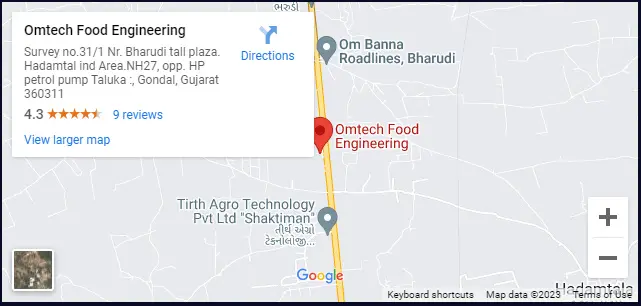
Hadamtala Industrial Area,
Opp. HP Petrol Pump. NH 27, Dist: Rajkot Gujarat, India.




 +91 9879670483
 info@omtechfoodengg.com