 By Admin
 July 01, 2026
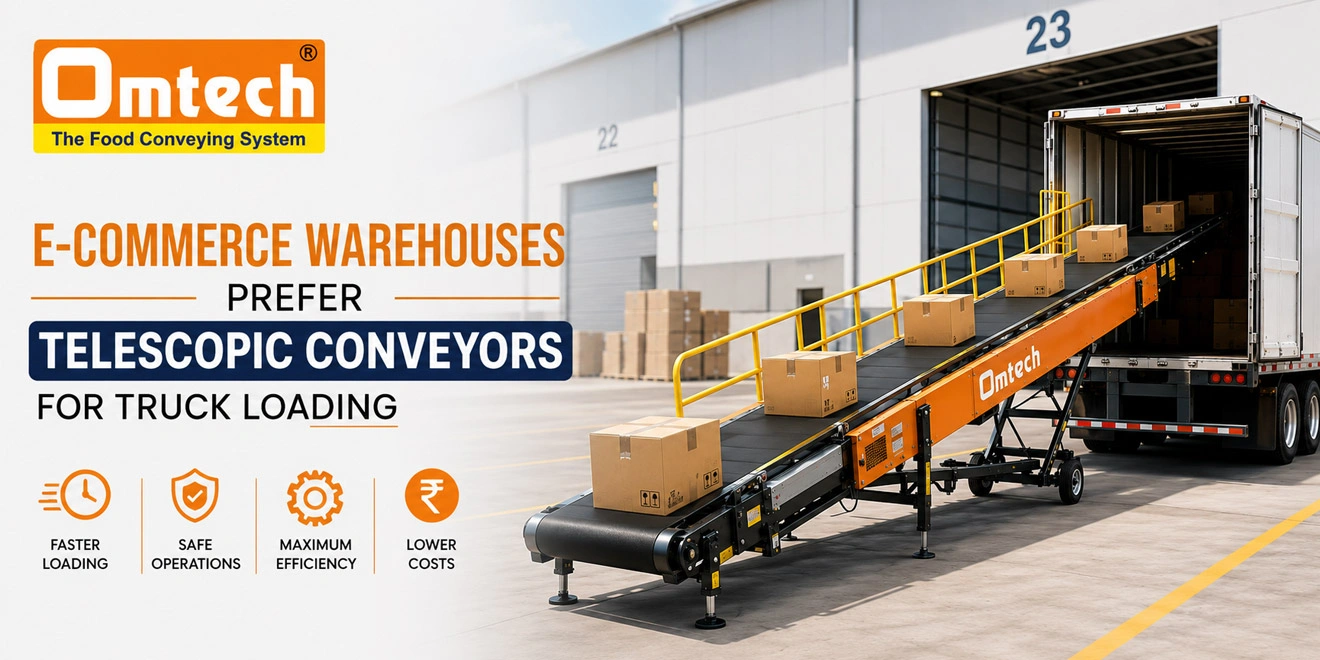
Anyone who's spent time inside an e-commerce fulfilment centre during peak season knows the loading bay is where things either run smoothly or fall apart completely. Trucks queued up, workers carrying boxes by hand up a ramp, someone yelling about a delivery deadline. It's chaotic in a way that customers never see, but warehouse managers feel it every single day. This is exactly the problem a Telescopic Belt Conveyor was built to solve.
Manual loading has an obvious ceiling. A worker can only carry so many boxes an hour before fatigue sets in, and fatigue is where mistakes and injuries start creeping in. E-commerce volumes don't really allow for that kind of ceiling anymore, not with same-day and next-day delivery promises pushing warehouses to move product faster than ever.
Unlike a fixed conveyor belt, a telescopic design extends and retracts, reaching deep into a truck's cargo area and pulling back out as the load changes. This single feature changes everything about how loading actually happens. Instead of workers walking boxes to the far end of a trailer, the conveyor comes to them, cutting out most of the walking, lifting, and repetitive strain that used to eat up hours during a shift.
E-commerce operations rarely deal with a single truck size. Small delivery vans, mid-size trucks, large trailers all show up at the same dock on the same day. A telescopic conveyor for truck loading adjusts in length and height to match whatever vehicle pulls in, without needing separate equipment for each size. That flexibility alone saves warehouses from the mess of juggling multiple loading setups just to handle routine variation in fleet size.
Peak shopping seasons don't leave room for slow loading bays. A telescopic conveyor keeps boxes moving continuously from the sorting area straight into the truck, cutting down turnaround time per vehicle. Faster loading means more trucks cycled through the same dock in a day, which directly affects how many orders actually leave the warehouse on schedule.
Warehouse injury claims tied to repetitive lifting and awkward carrying postures are a real cost centre, not just a compliance headache. Telescopic conveyors reduce the physical strain on loading staff by handling the reach and carry work mechanically. Fewer injuries means fewer missed shifts, lower insurance claims, and a workforce that isn't burned out by the third hour of a loading rush.
None of this matters if the equipment itself can't survive daily wear. Reliable telescopic conveyors are built with steel frames, high-strength belts, and motors designed to handle heavy, bulky cargo without breaking down mid-shift. Easy installation and low maintenance needs also mean less downtime waiting on repairs, which matters a lot when a dock can't afford to sit idle during peak dispatch hours.
Loading docks are one of the most overlooked bottlenecks in e-commerce fulfilment, and the equipment used there has a direct impact on how fast orders actually reach customers. A well-built Telescopic Belt Conveyor takes pressure off workers, adapts to different truck sizes, and keeps loading bays moving during the busiest seasons. Omtech Food Engineering has been manufacturing telescopic belt conveyors and material handling systems from Rajkot, Gujarat, built for exactly this kind of demanding, high-volume warehouse environment. You can explore the full conveyor range at omtechfoodengg.com .
A telescopic conveyor extends and retracts to different lengths and heights, allowing it to reach directly into trucks of varying sizes, unlike a fixed conveyor that stays at one set length.
Yes, they're built with steel frames and high-strength belts specifically designed to manage heavy and bulky loads without slowing down operations.
Yes, by eliminating most manual carrying and awkward lifting during truck loading, they significantly cut down on the repetitive strain injuries common in high-volume loading bays.

Hadamtala Industrial Area,
Opp. HP Petrol Pump. NH 27, Dist: Rajkot Gujarat, India.




 +91 9879670483
 info@omtechfoodengg.com